
MusicTech.blog
How to Mix Drums: EQ, Compression, and Getting a Professional Sound
May 13, 2026
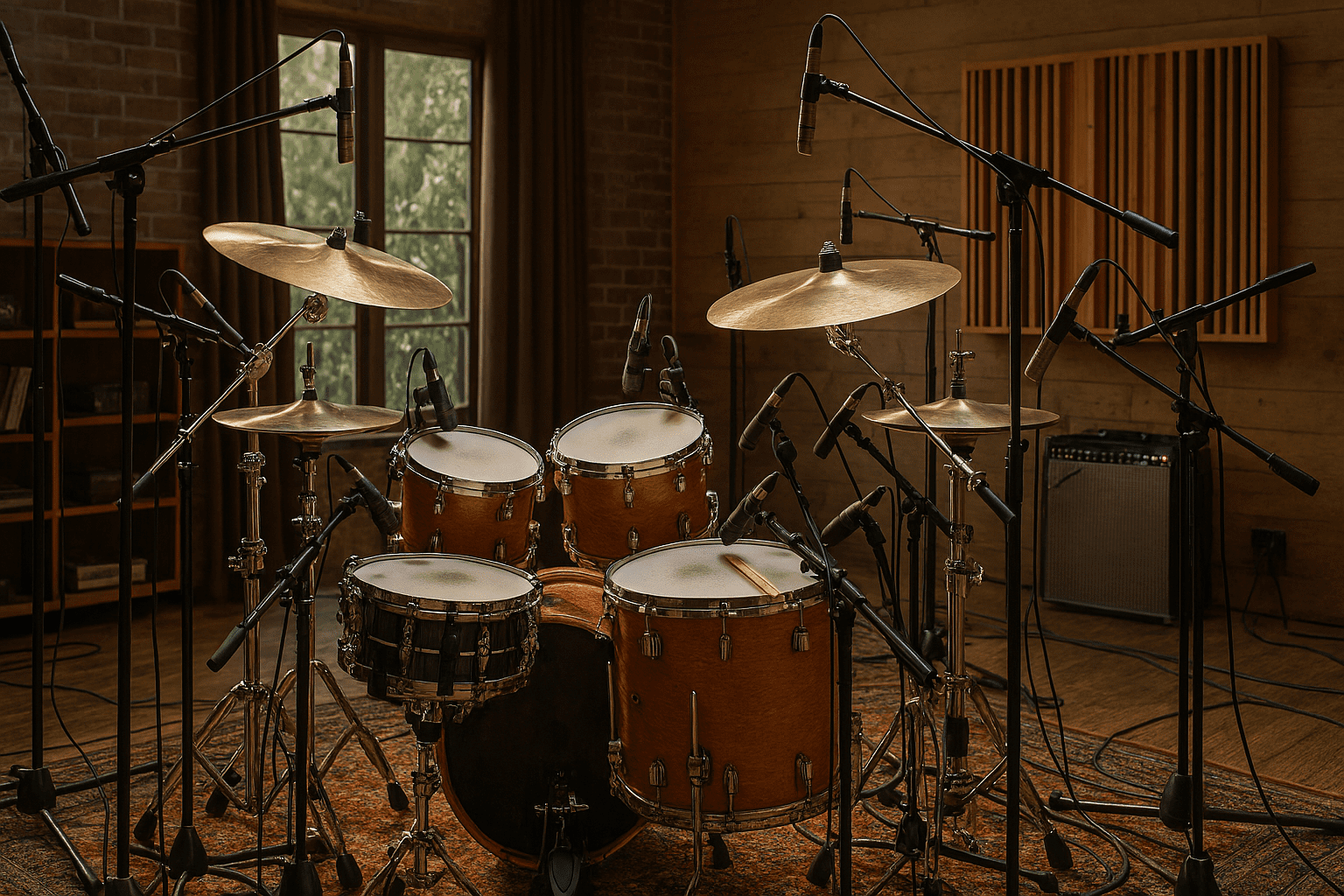
Mixing drums is one of the most technically demanding tasks in music production — and one of the areas where the difference between a professional result and an amateur one is most audible. A well-mixed drum kit sits at the rhythmic foundation of a track with punch, clarity, and appropriate size for the music. A poorly mixed kit sounds weak, muddy, boxy, or unconvincing. This guide covers the complete drum mixing workflow from individual channel processing to the drum bus.
The Starting Point: Gain Staging and Balance
Before touching any processing, get a rough level balance between the drums’ component microphones. The overheads and room mics establish the overall character and balance of the kit — they should sit at a level that sounds like a complete drum kit on their own. The close mics on kick, snare, and toms then supplement this foundation, adding definition, punch, and individual channel control. If you’re working with a virtual drum instrument or samples, the same principle applies: establish the overall balance before processing individual channels. Good gain staging and balance at this stage makes every subsequent processing decision more transparent and accurate.
Kick Drum Processing
The kick drum has two essential characteristics to preserve and enhance: the low-frequency fundamental (the “thump” or “weight” — typically 60–80Hz) and the high-frequency attack (the “click” or “beater” — typically 3–5kHz). Understanding how audio frequencies work helps you target these regions accurately. EQ should boost these two regions while cutting the muddy midrange between them (typically 200–400Hz). The extent of the midrange cut depends on the recording — some kicks benefit from a deep, wide cut; others need only a gentle dip.
Compression on the kick controls its dynamic range and can add punch. A slow-to-medium attack (30–60ms) lets the initial transient through before compression engages — preserving impact — while the release time controls how quickly the compressor recovers. A ratio of 4:1 to 8:1 with 4–8dB of gain reduction is a common starting point. For modern, tight-sounding kick drums (hip-hop, pop, electronic), higher ratios and more gain reduction produce the punchy, controlled sound. For more organic rock and jazz kick sounds, lighter compression or no compression at all may be more appropriate. If you’re new to compression on drums, the beginner’s guide to compression covers the fundamentals before applying them to individual drum channels.
Snare Drum Processing
The snare has three components to balance: the body/weight (around 200Hz), the crack and presence (2–5kHz), and the wire/snare sound from the bottom head (if miked). EQ the top mic to reduce any boxiness in the low-mids and boost the crack in the 3–5kHz range. The bottom snare mic, if present with polarity flipped, should be EQ’d to emphasise the wire character — often a significant boost in the upper midrange around 5–8kHz. Blend the top and bottom mics to taste.
Compression on snare adds snap and sustain. Fast-to-medium attack (5–20ms) preserves the initial crack; the release time determines whether the snare sounds tight and punchy (fast release) or sustained and roomy (slower release). A 4:1 to 6:1 ratio with 4–6dB of gain reduction is a useful starting point. An 1176-style FET compressor is a classic choice for snare — the aggressive character of the 1176 suits the snare’s snap and energy. Understanding how compression and limiting work as audio effects will help you make faster decisions on every drum channel.
Overhead and Room Processing
The overhead mics capture the full kit with its natural balance and the cymbals’ detail and air. High-pass the overheads aggressively — 100–200Hz or higher — to remove the low-frequency content that the close mics handle better, reducing phase issues and clearing the low end for the dedicated kick and snare mics. A high shelf boost at 10–12kHz adds air and shimmer to the cymbals. Gentle compression (2:1, slow attack, slow release) can add cohesion to the overhead image without squashing its natural dynamics.
Room mics are a creative tool as much as a technical one. The room sound can be left natural for organic, realistic results, or heavily processed — a room mic through a hard limiter and driven into saturation produces the aggressive, pumping room sound characteristic of hard rock and metal productions. For a more controlled approach to adding room character without a real room mic recording, short room reverb on the drum bus can simulate a convincing live space. Parallel compression on the room channel (blending a heavily compressed version with the natural signal) adds density and weight without eliminating the natural dynamics.
The Drum Bus
Routing all drum channels to a dedicated drum bus (aux group) allows you to apply processing to the whole kit simultaneously, adding cohesion — the “glue” that makes the individual elements sound like they’re playing together in the same room rather than as separate, independently processed sounds. A bus compressor at 2:1 to 4:1 with a moderate attack and musical release, providing 2–4dB of gain reduction, is the standard approach. The SSL G-Bus compressor character is the most widely used sound for drum bus glue; optical-style compression (LA-2A type) produces a smoother, less punchy result suited to more organic styles.
Saturation on the drum bus — light tape or console emulation — adds harmonic warmth and density. This is the same principle that made classic analogue recording consoles and tape machines sound musical: the subtle harmonic distortion introduced by pushing through analogue circuitry adds life and cohesion to digital recordings. Even a small amount of tape or console saturation on a drum bus transforms the sense of the elements sitting together.
Parallel Compression
New York-style parallel compression on drums is one of the most effective tools in the drum mixer’s kit. Send the drum bus to an aux, apply heavy compression (high ratio, fast attack, 10–15dB of gain reduction) to the aux, and blend the heavily compressed signal back under the natural drums at 20–40% of the dry level. The result is the density, sustain, and “glue” of heavy compression without the loss of transient impact and natural dynamics that heavy compression alone would produce.
This technique — sometimes called New York compression — is particularly effective on drums because it preserves the crack of the snare and the attack of the kick (which heavy direct compression would kill) while adding the sustained, dense character of compressed drums underneath. Adjust the blend level to taste: less compressed signal for a natural, open sound; more for the dense, pumping character of hard rock and hip-hop drum sounds. Once you’ve nailed the drum mix, the same parallel compression approach applies equally well when mixing vocals — it’s one of the most transferable mixing techniques available.
Further Reading
- Mixing Basics: How to Balance, EQ, and Pan Your Tracks
- How to Use Compression: A Beginner’s Guide to Compressors
- EQ Explained: How to Shape Tone and Fix Problems in Your Mix
- How to Record Drums at Home: Mic Setups from 1 to 8 Mics
- Saturation and Distortion Explained: Adding Warmth and Grit to Your Mix
- Phase and Polarity Explained: Why Your Audio Can Disappear
- Audio Effects Explained: A Beginner’s Guide to Reverb, Delay, Compression, and More