
MusicTech.blog
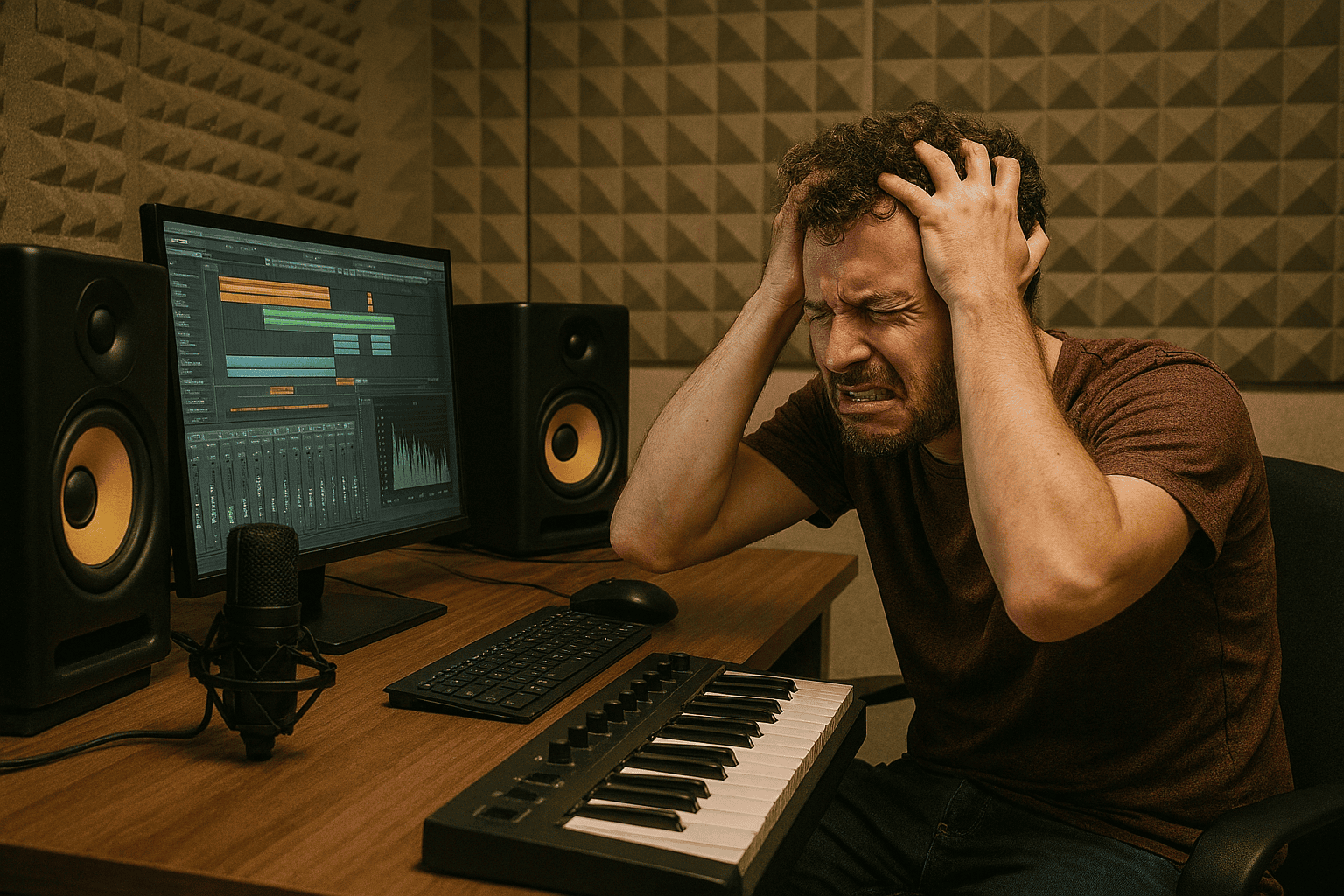
If your mix can sound bad everywhere else except the room you made it in, the room is almost always the reason why.
You bounce the track, you’re proud of it, and then you play it in the car on the way to grab coffee and your stomach drops. The bass is boomy in one spot and gone the next. The vocal that felt perfectly balanced now sounds buried, or worse, harsh.
In the overwhelming majority of cases, the honest answer is: your room was never telling you the truth in the first place.
It’s Not Your Ears, and It’s Probably Not Your Gear
The instinct after an experience like this is to start questioning the fundamentals. But for most home studio owners, the actual explanation is more mundane: an untreated room is adding, removing, and distorting frequencies before they reach your ears.
This is why the same mix can sound “correct” in your studio and wrong everywhere else — the room’s coloration doesn’t travel with the file. Take the track anywhere else and the correction you built in is now working against a room that doesn’t have the same problem.
The Usual Suspects
A few room-related issues account for most of this “sounds great here, bad everywhere else” experience:
- Bass buildup in corners and at the mix position makes low end feel bigger and tighter in your room than it actually is on the file, so you pull back low end that other systems desperately need.
- Comb filtering from early reflections artificially boosts or cancels narrow frequency bands around your mix position, leading to compensating EQ moves that sound wrong the moment the reflection pattern changes.
- An asymmetrical room or off-center mix position skews the stereo image, so pans and width decisions that feel balanced in your chair are lopsided everywhere else.
- Room modes at specific frequencies make certain bass notes disappear or swell depending on exactly where you’re sitting, so you’re mixing low end against a moving target without realizing it.
None of these are mixing mistakes in the traditional sense — they’re accurate reactions to inaccurate information.
How to Confirm It’s the Room
Before assuming it’s acoustics, it’s worth ruling out the obvious alternative explanations quickly:
- Play a commercial reference track you know well through your monitors at the same level as your mix. If it sounds strange in your room too, that’s a strong signal the room is the variable.
- Check your mix in mono. Comb filtering and phase issues from reflections often become obvious the moment you collapse to mono.
- Move your listening position slightly. If a single step changes the low end dramatically, you’re sitting near a room mode null or peak.
If any of these point back to the room, acoustic treatment — not more gear — is the fix.
Workarounds While You Treat the Room
Reference Constantly
Keep two or three commercial tracks you know intimately loaded in your session at matching loudness, and A/B against them throughout the mix — not just at the end. This anchors your decisions against something external to the room’s coloration.
Check on Multiple Systems Before Calling It Done
Headphones, a phone speaker, and a car system cover three very different failure modes. If a mix holds up reasonably across all three, it’s in much better shape than one only ever judged in the room that created the problem.
Take Breaks and Return With Fresh Ears
Ear fatigue compounds room problems. A short break resets your baseline and often reveals problems that felt invisible ten minutes earlier.
Consider a Second, Very Different Playback Source
Even a modest pair of closed-back headphones as a reality check alongside your monitors gives you a second data point that isn’t subject to the same room coloration.
The Real Fix Is Still the Room
Workarounds buy you time and reduce the damage, but they don’t solve the underlying problem. If translation problems keep showing up mix after mix, that consistency points to a fixed acoustic issue in the room rather than a variable performance issue in the mix. Bass trapping the front corners and treating first reflection points typically resolves the majority of these complaints.
For the full walkthrough on identifying and fixing these issues, see our companion guide on home studio acoustics, which covers standing waves, absorption vs. diffusion, bass trapping, and a prioritized, budget-conscious treatment plan.
Continue Reading in This Series
- Room Acoustics: Why Your Space Matters More Than Your Gear — the full treatment plan behind this problem
- Bass Traps Explained: Do You Really Need Them?
- How to Find Your First Reflection Points