
MusicTech.blog
Acoustic Treatment for Apartments and Shared Spaces (Non-Permanent Solutions)
July 20, 2026
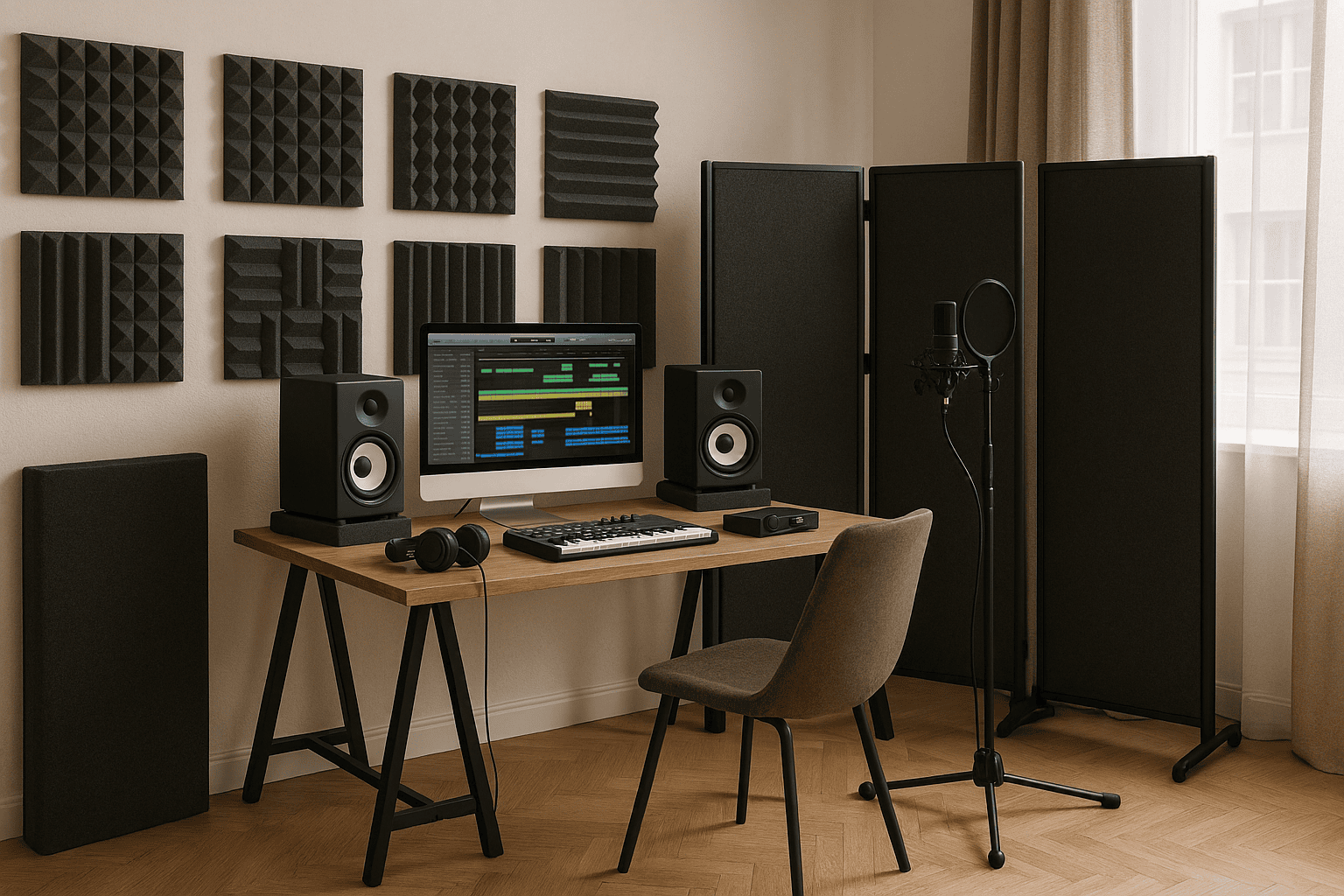
Most acoustic treatment guides assume you can drill into walls and build permanent frames wherever the mirror trick says you should. Renters, apartment dwellers, and anyone in a shared space usually can’t do any of that. This guide covers what’s actually achievable with zero permanent modifications.
What Changes When You Can’t Mount to Walls
The core acoustic problems — bass buildup in corners, first-reflection comb filtering, flutter echo — don’t change just because you’re renting. What changes is the mechanism you use to address them. Wall-mounted panels and hardwired cleats are off the table; freestanding, furniture-based, and removable solutions take their place.
Freestanding Bass Traps and Panels
Instead of wall-mounted corner bass traps, freestanding versions on their own bases deliver a large portion of the same low-frequency benefit. For first-reflection points, freestanding panels on adjustable stands can be positioned at the exact spots identified by the mirror trick without a single hole drilled.
Furniture as Acoustic Treatment
Furniture you already own does real acoustic work: a tightly packed bookshelf against a side wall acts as a surprisingly effective diffuser, reducing flutter echo. Heavy curtains over windows reduce reflections from what is usually the most reflective surface in a rented room. A rug over hard flooring meaningfully reduces floor-bounce reflections. A closet full of hanging clothing functions as genuinely effective absorption for vocal recording specifically.
Command Strips, Tension Rods, and Damage-Free Mounting
For lightweight absorptive panels, heavy-duty removable hooks rated for the panel’s actual weight can hold panels against a wall without drilling, and remove cleanly at move-out. Tension-mounted curtain rods let you hang heavier fabric-based absorption across a window or wall section without any wall penetration.
Making a Multi-Purpose Room Work
If your recording space doubles as a bedroom or living room, the practical answer is usually a session setup you can deploy and pack away rather than a permanent installation. Keep freestanding panels light enough to move solo, and mark your ideal monitor and mic positions on the floor with small tape marks so you can quickly return to your measured setup without redoing the mirror trick every time.
What to Skip in a Rental
Avoid anything requiring drywall anchors rated for heavy weight unless you’ve confirmed with your landlord. Skip spray foam or adhesive-mounted insulation directly to walls or ceilings, which is both a lease violation risk and hard to reverse. Full room-in-room isolation booths are expensive, heavy, and rarely practical for a temporary living situation.
Bottom Line
Renting or sharing a space doesn’t mean giving up on acoustic treatment — it means shifting from permanent, wall-mounted solutions to freestanding, furniture-based, and removable ones. The underlying acoustic problems and priorities don’t change; only the mounting method does.