
MusicTech.blog
Sennheiser HD 600 vs HD 650 Review: Which Reference Headphone Should You Buy?
May 31, 2026
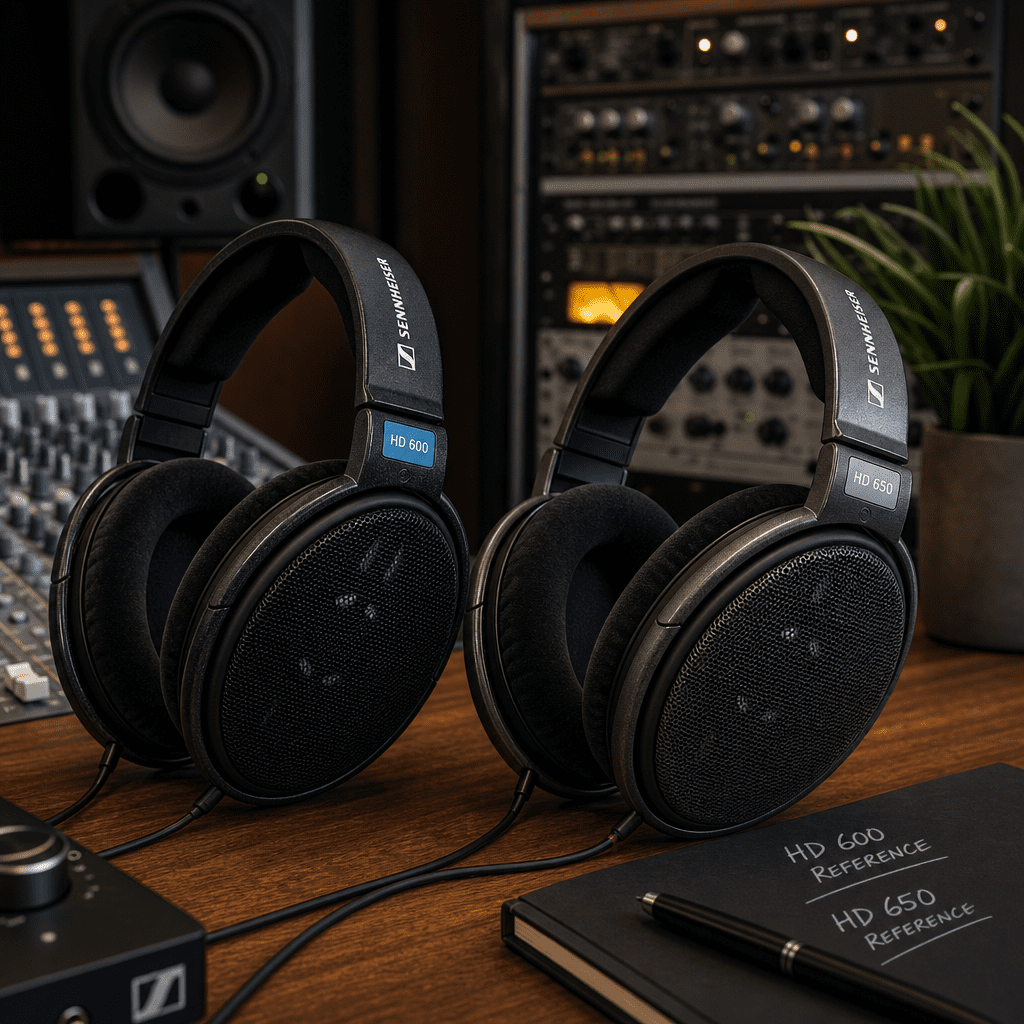
The Sennheiser HD 600 and HD 650 are two of the most respected reference headphones in existence. Both have been in continuous production since the 1990s, both are used by professional audio engineers for critical listening and mixing work, and both are priced at a level that makes them accessible to serious home studio producers without requiring a significant compromise on quality. They’re also close enough in specification and price that choosing between them is genuinely difficult. This review examines both in detail and gives you a clear answer on which to buy.
Specifications at a Glance
Both headphones are open-back dynamic driver designs using Sennheiser’s proprietary 40mm transducers. Both have an impedance of 300Ω, requiring a dedicated headphone amplifier to reach their full potential — the low-powered headphone outputs on most audio interfaces will drive them to adequate volume but not reveal their full dynamic range and detail. Both use a 3.5mm to 6.35mm cable termination and the same proprietary cable connector. Frequency response is rated at 12–38,500Hz for the HD 600 and 10–41,000Hz for the HD 650. Both are manufactured in Ireland.
Sound Character: The Key Difference
The HD 600 is the more neutral of the two. Its frequency response is exceptionally flat through the critical midrange, with a slight rolloff in the sub-bass and a controlled, well-extended high end. It’s the headphone that most accurately reflects the tonal balance of the source material without imposing a character of its own. Audio engineers who use headphones for critical mixing and mastering tasks tend to prefer the HD 600 for exactly this reason — it tells you what’s in the recording without editorialising.
The HD 650 has a warmer, slightly darker tonal character. The low-midrange is marginally more prominent, the high frequencies roll off slightly earlier, and the overall presentation is more musical and less clinical than the HD 600. This makes the HD 650 more enjoyable for extended listening sessions — fatigue is a real factor with bright, analytical headphones used over many hours — but it also means that what you hear on the HD 650 is slightly coloured by its character. Producers who do long creative sessions and value a more musical sound often prefer it to the more analytical HD 600.
Comfort and Build
Both headphones are among the most comfortable in their class for long sessions. The velour ear pads are soft and breathable, the clamping force is moderate rather than tight, and the headband distributes weight evenly across the top of the head. The HD 650 has marginally softer pads in new condition, but both break in over time to become equally comfortable. The build is a mix of premium plastics and metal components — not as visually imposing as some high-end headphones, but robust and practical. Both have been user-serviceable for decades: replacement ear pads, cables, and headbands are readily available and cheap.
Amplification Requirements
At 300Ω impedance, both headphones benefit significantly from a dedicated headphone amplifier. The Schiit Magni, JDS Labs Atom, and Topping L30 are all popular pairings at accessible price points — any of these will reveal substantially more detail and dynamic range than the headphone output of a typical audio interface. Driving 300Ω headphones from a phone or laptop is possible but produces noticeably compressed dynamics and a thinner sound.
Which Should You Buy?
If you’re buying headphones primarily for mixing and critical listening work where accuracy is the priority — use the HD 600. Its flatter, more neutral character makes mixing decisions more trustworthy and translatable.
If you use headphones for both mixing reference and extended creative sessions, and you find bright analytical headphones fatiguing — use the HD 650. Its warmer character is less punishing on long sessions, and it’s still sufficiently neutral for serious mixing work, just with a small tonal bias you can learn to account for.
Both are excellent. Either would serve a serious home studio producer well for many years. The difference is real but subtle — more important is that both represent a substantial step up from consumer headphones and most budget studio headphones, and either one is a smart long-term investment in your monitoring setup.