
MusicTech.blog
Shure SM7B Review: The Podcast and Vocal Microphone Everyone Wants
July 20, 2026
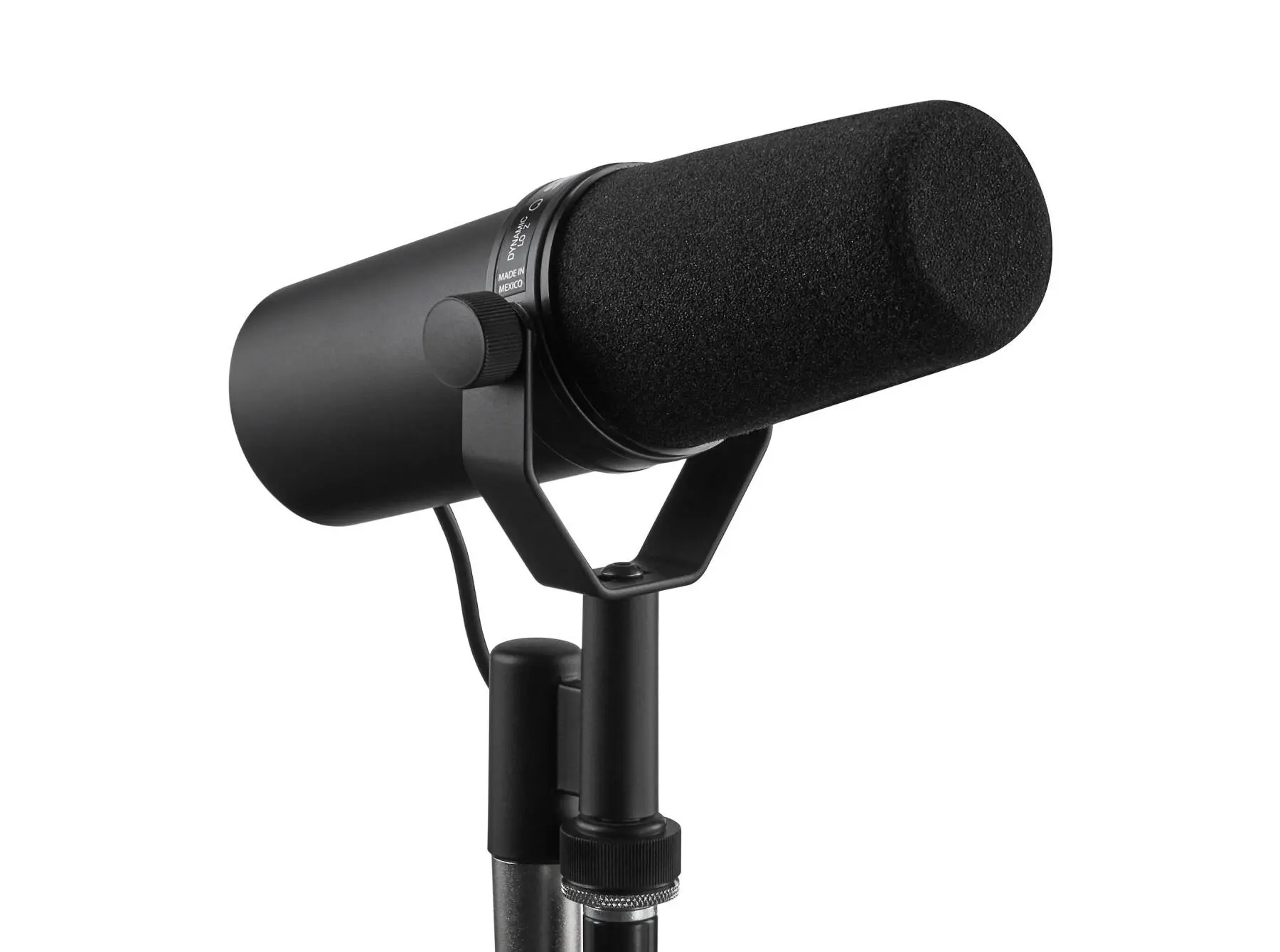
The Shure SM7B has become one of the most recognisable microphones in modern recording culture — partly because of its prominent appearance in countless podcast setups and streaming studios, and partly because it genuinely delivers. This is a professional broadcast microphone with a 50-year heritage, a flat, wide-range frequency response with selectable presence boost, and an ability to handle high sound pressure levels that makes it as comfortable in front of a screaming guitar amplifier as it is on a podcaster’s desk. This review covers what it does, who it’s for, and the one critical thing you must know before buying it.
Background
The SM7B is a large-diaphragm dynamic microphone — a direct descendant of the SM7 used by Michael Jackson on Thriller. It’s been in continuous production since 1973 in various forms and has become a standard in broadcast studios, podcast setups, voiceover booths, and recording studios worldwide. Its reputation for producing a professional, polished vocal sound without the condenser’s sensitivity to room noise has made it particularly popular for home studio use, where acoustic treatment is often imperfect.
Sound Character
The SM7B has a smooth, warm, broadcast-style frequency response. Its flat setting produces a wide, extended response with no significant peaks or dips — honest and clean. The presence boost switch (labelled “High Frequency Emphasis” on the switch panel) adds a gentle lift above 5kHz that adds definition, air, and presence to vocals. A low-frequency roll-off switch reduces bass buildup from the proximity effect when used close to the mouth — essential for spoken word applications where the dynamic mic is often used at 10–20cm distance.
For vocals, the SM7B produces a sound that sits naturally in a mix without needing heavy EQ treatment — warm in the low-mids, clear in the presence region, and without the harsh high-frequency peaks that some condenser microphones produce on sibilant vocal sounds. For podcasting and broadcast, it’s specifically voiced for intelligibility and naturalness.
The Critical Issue: Gain Requirements
This is the most important thing to know about the SM7B before purchasing: it requires a lot of clean preamp gain. Specifically, it needs approximately 55–60dB of gain to reach a usable recording level from a typical speaking or singing source. Many audio interfaces — particularly budget models — top out at 50–55dB of gain before the noise floor becomes unacceptable. The Focusrite Scarlett Solo, Scarlett 2i2, and SSL 2 are common interface choices that struggle to drive the SM7B cleanly.
The practical solution: a Cloudlifter CL-1 or similar inline preamp booster, which provides an additional 20–25dB of clean gain between the microphone and the interface. This brings any interface with 35dB+ of preamp gain up to the SM7B’s requirements cleanly. Factor this into your budget — a Cloudlifter typically adds $70–$100 to the system cost.
Interfaces with sufficient native gain to drive the SM7B without a booster include the Universal Audio Volt series (which includes a “76” mode adding gain and compression character), the Focusrite Scarlett 4i4 and higher, the RØDECaster Pro, and any interface with a high-quality preamp rated at 60dB+ of gain.
Build Quality and Included Accessories
The SM7B is built to professional broadcast standards — heavy steel construction with a built-in swivel adapter and a yoke mount that allows precise angle adjustment. The internal shock mount significantly reduces stand-borne vibration without requiring a separate external shock mount. The microphone ships with two pop filters of different sizes — a smaller “A7WS” windscreen that fits over the capsule end, and a larger close-talk windscreen. Both are effective at reducing plosive sounds. A captive locking ring secures the yoke angle reliably.
Alternatives to Consider
The Electro-Voice RE20 is the SM7B’s primary competitor in professional broadcast — slightly brighter, with a “Variable-D” design that minimises proximity effect without needing the low-cut filter. The Audio-Technica AT2020 is a large-diaphragm condenser at a lower price point that produces a different but also professional vocal sound — brighter, more open, more sensitive to room sound. The Rode PodMic is a direct SM7B competitor at a significantly lower price, with similar broadcast-voiced character and somewhat lower gain requirements.
Verdict
The SM7B is an excellent microphone that fully deserves its reputation. It produces professional vocal recordings in imperfect acoustic environments, handles high SPL sources, requires no phantom power, and has a proven 50-year track record. The gain requirement is a real consideration that affects total system cost and interface compatibility — but once addressed with an appropriate interface or inline booster, the SM7B delivers exactly the warm, broadcast-quality vocal sound that made it famous.
Further Reading
- How To Choose A Great Microphone
- How to Record Vocals at Home
- Choosing An Audio Interface
- How to Reduce Latency in Your DAW