
MusicTech.blog
How To Choose A Great Microphone
February 14, 2025
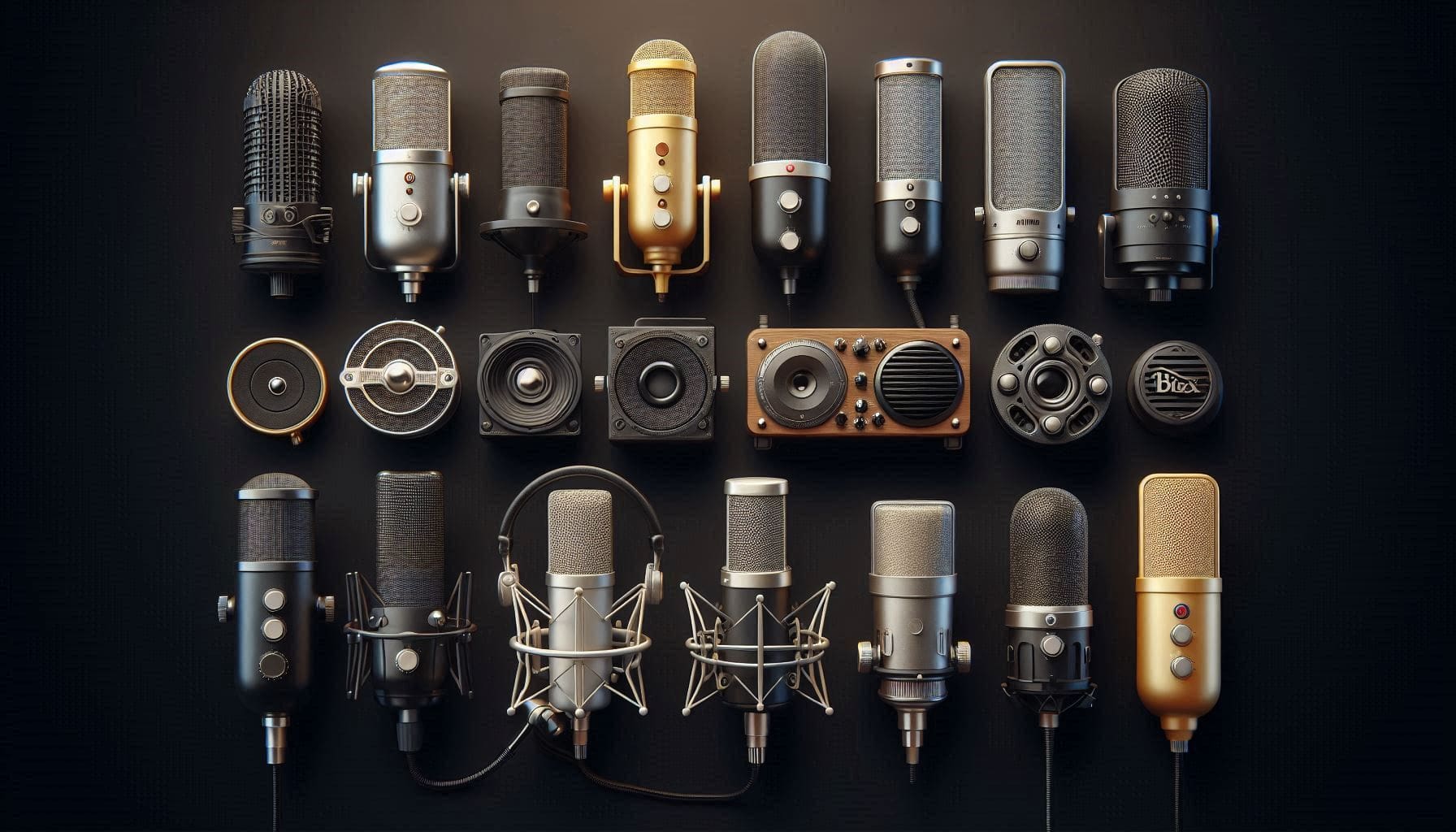
The microphone market is enormous and the marketing language is relentless. “Studio quality.” “Broadcast grade.” “Professional condenser.” These phrases appear on microphones ranging from $30 to $30,000. Cutting through it starts with understanding what different microphone types actually do — and then matching that to what you actually need to record.
The Two Main Microphone Types
Dynamic Microphones
Dynamic microphones use a simple electromagnetic design: a thin diaphragm attached to a coil of wire sits inside a magnetic field. When the diaphragm moves in response to sound, the coil moves with it, generating a small electrical current. No power required — the signal comes entirely from the acoustic energy hitting the diaphragm.
This design gives dynamic microphones several useful characteristics. They handle very high sound pressure levels without distorting — you can stick a dynamic mic directly in front of a guitar amplifier running at stage volume and it won’t flinch. They’re physically rugged and tolerant of rough handling. They reject off-axis sound (sound arriving from the sides and rear) relatively well, which makes them more forgiving of untreated rooms. And because they don’t require power, they’re simple and reliable.
The tradeoff is sensitivity and high-frequency detail. Dynamic microphones capture less of the subtle upper-frequency content and fine transient detail that condenser microphones excel at. For sources that need that detail — acoustic instruments, vocals intended for close inspection in a mix — the limitation is real.
Best uses for dynamic microphones: electric guitar amplifiers, snare drum and toms, loud vocals (live performance or rock/metal recording), bass amplifiers, brass instruments, any loud source in a live or poorly treated environment.
Essential dynamic microphones: Shure SM57 in history, primarily used on instruments and amps), Shure SM58 (the standard live vocal mic), Shure SM7B (large diaphragm dynamic with a flat, smooth response, used heavily in broadcasting and podcasting), Electro-Voice RE20 (broadcast standard, excellent on bass and low instruments).
Condenser Microphones
Condenser microphones use a capacitor (condenser) to convert acoustic energy into an electrical signal. A thin, electrically charged diaphragm sits very close to a backplate. When the diaphragm moves in response to sound, the capacitance between diaphragm and backplate changes, generating the signal. Because this design requires the diaphragm to be maintained at a polarising voltage, condenser microphones need power — supplied by phantom power (+48V) from a microphone preamp or audio interface.
Condenser microphones are more sensitive than dynamics and capture high-frequency detail and transient response more accurately. This makes them the preferred choice for studio recording of vocals, acoustic instruments, and any source where detail and clarity are priorities. It also means they’re less forgiving: a condenser microphone in an untreated room with prominent reflections will capture those reflections clearly and faithfully — which is not always what you want.
Best uses for condenser microphones: studio vocals, acoustic guitar, acoustic piano, acoustic strings, overhead microphones on drum kits, room microphones, acoustic instruments of any kind, voiceover in controlled environments.
Condenser microphones come in two sizes — large diaphragm (LDC) and small diaphragm (SDC) — which have meaningfully different characteristics.
Large Diaphragm vs Small Diaphragm Condensers
Large diaphragm condensers (diaphragm diameter typically 1 inch or more) have a warm, full character and add a flattering proximity effect (bass boost as the source gets closer) that works well for vocals. They’re the default choice for lead vocals in studio recording and are what most home studio producers think of when they imagine a “studio microphone.” They’re sensitive enough to capture the subtle detail of a vocal performance and warm enough to flatter most voices.
Small diaphragm condensers (typically 0.5 inch diaphragm) are more accurate and have a flatter, more extended high-frequency response with less coloration. They’re the preferred choice for acoustic instruments — acoustic guitar, violin, piano, acoustic ensembles — and for stereo recording techniques that require matched pairs of microphones (X/Y, ORTF, spaced pair). The Neumann KM184, Rode NT5 are widely used examples.
Polar Patterns Explained
A microphone’s polar pattern describes which directions it picks up sound from. Understanding polar patterns is essential for both microphone placement and for managing unwanted sound sources in a recording environment.
Cardioid
The most common pattern for studio and live use. A cardioid microphone picks up sound primarily from the front, with significantly reduced sensitivity at the sides and a rejection null at the rear. For home studio use in a room with reflective walls or a noisy environment, cardioid pattern minimises the pickup of room sound, monitoring bleed, and ambient noise from behind the microphone. Most home studio condensers use a cardioid pattern.
Omnidirectional
An omnidirectional microphone picks up equally from all directions. It captures room ambience and has no proximity effect, which means the tonal balance remains consistent regardless of how close the singer is to the microphone. Omni patterns are used in room microphone applications, classical recording, and situations where the acoustic environment is an asset rather than a problem. In a poor-sounding room, omni patterns are usually the wrong choice.
Figure-8 (Bidirectional)
A figure-8 microphone picks up equally from the front and rear with rejection at the sides. Used for face-to-face interview recording, mid-side stereo recording techniques (where a figure-8 mic is combined with a cardioid in a specific arrangement), and situations where you want to capture sound from two opposing directions while rejecting the sides. Ribbon microphones are naturally figure-8 in pattern.
Ribbon Microphones
Ribbon microphones use a thin strip of corrugated metallic foil suspended in a magnetic field. They produce a warm, smooth, naturally figure-8 sound that is famously flattering on electric guitars, brass instruments, room recording, and some vocals. Classic ribbon microphones from RCA and Coles are found on recordings from the 1950s through the present day.
Modern ribbon microphones from Royer Labs, AEA, and Beyerdynamic have made ribbon recording accessible below the vintage market price. Ribbons require careful handling — the ribbon element is delicate and can be damaged by phantom power (on passive ribbon designs) or by blasts of air from close positioning. Active ribbon designs (with internal preamps) are more robust. For guitar amplifiers, brass, and room recording in a well-treated space, a ribbon microphone is often the first choice.
What to Buy at Different Budgets
Under $150 — Getting Started
The Audio-Technica AT2020 is the standard recommendation at this tier — a solid large diaphragm condenser with clean, uncoloured sound that handles vocals, acoustic guitar, and most studio sources competently. The Rode NT1-A (slightly above $150 but frequently on sale) is a step up with a very low self-noise figure, making it one of the quietest microphones available at any price. For dynamics, the Shure SM57 and SM58 remain the benchmarks and cost around $100 each — they’ve been the workhorse instruments and vocal microphones in professional studios and on stages for five decades.
$150–$500 — Serious Home Studio
The Rode NT1 (5th Generation) is a major upgrade over the original NT1-A with USB connectivity alongside XLR and genuinely excellent sound quality. The AKG C214 is the single-pattern version of the legendary C414 and offers professional large diaphragm condenser sound at an accessible price. The Shure SM7B occupies a unique position — a large diaphragm dynamic with a smooth, broadcast-optimised response that has become the dominant microphone in podcasting, streaming, and modern vocal recording. It requires a preamp with substantial gain, so pair it with a preamp that has sufficient clean gain.
$500 and Above — Professional Territory
The Neumann TLM 102 and TLM 103 represent the entry point into the Neumann range — the most respected microphone brand in professional recording. The TLM 103 in particular has been a studio standard for decades and appears on an enormous proportion of commercially released recordings. The AKG C414 XLS offers nine switchable polar patterns and a flat, accurate response that makes it the most versatile microphone at its price point. The Rode NT2-A offers multi-pattern capability at a lower price than the C414 and punches above its weight class consistently.
Common Mistakes When Buying a Microphone
- Buying a condenser for a poorly treated room. A condenser microphone will capture your room’s reflections, air conditioning hum, and street noise with the same accuracy it captures your voice. A dynamic microphone’s off-axis rejection provides a practical advantage in untreated spaces.
- Ignoring preamp gain requirements. The Shure SM7B and Electro-Voice RE20 are popular dynamic microphones that require 50–60dB of clean gain from a preamp. Many budget audio interfaces can’t provide this without introducing significant noise. Check that your preamp is capable before buying.
- Assuming USB microphones are inferior. Modern USB microphones from Rode, Blue (now Shure), Audio-Technica, and others contain good preamps and converters and are genuinely capable of professional results. They’re not ideal for multi-microphone setups, but for single-source recording — podcasting, voiceover, home studio vocals — a good USB microphone is a legitimate professional tool.
- Confusing sensitivity specs with quality. A more sensitive microphone isn’t necessarily a better one — it just picks up more of everything, including room noise and handling sounds. Sensitivity specs should inform your choice of microphone for a given application, not serve as a proxy for overall quality.
The Bottom Line
For most home studio producers recording vocals and acoustic instruments: a large diaphragm condenser microphone in the $150–$300 range, combined with even basic acoustic treatment and a good preamp, will produce results that are competitive with professional recordings. The microphone is important, but it’s not the only variable — room acoustics, preamp quality, microphone technique, and the performance being recorded all contribute significantly to the final result.
For producers recording loud sources — guitar amplifiers, drums, brass — a dynamic microphone like the SM57 or SM58 is often the better choice regardless of budget, because the application demands a microphone that can handle high SPLs and reject the room naturally.
Start with understanding what you’re recording and how it will be used, then match the microphone type and pattern to that application. The rest follows.